
7x300sec Subs, with Darks, Flats and Bias
08/10/2015

 Taken with an ODK12 on 6.7.15. The camera was a Canon 550D at ISO800. 15 x 60sec was the exposure, all sigma-average stacked in Astroart. No guiding, no flats, no darks and no IDAS filter used. A lucky shot considering how close it was to the southern horizon. Just 11° above it among trees.
 Taken on the 6th of July 2015, during a collimation session. The telescope was an Orion Optics ODK12 and the camera a Canon 550D. The exposure was 20 frames of 60sec each, at ISO800, no guiding, no flats, no darks and not with my usual IDAS filter. It was just to see the effect on photography that collimation by eye had. The frames were stacked in Astroart as 4 groups of 5 frames sigma-added, and the resultant 4 frames were averaged. Final processing was done in Photoshop. It needs more time to make a reasonable photograph but it was done as a test of detail, so look at the number of stars in the body of the nebula particularly the one next to the White Dwarf.

.jpg)
%2BJPEG.jpg)
.jpg)

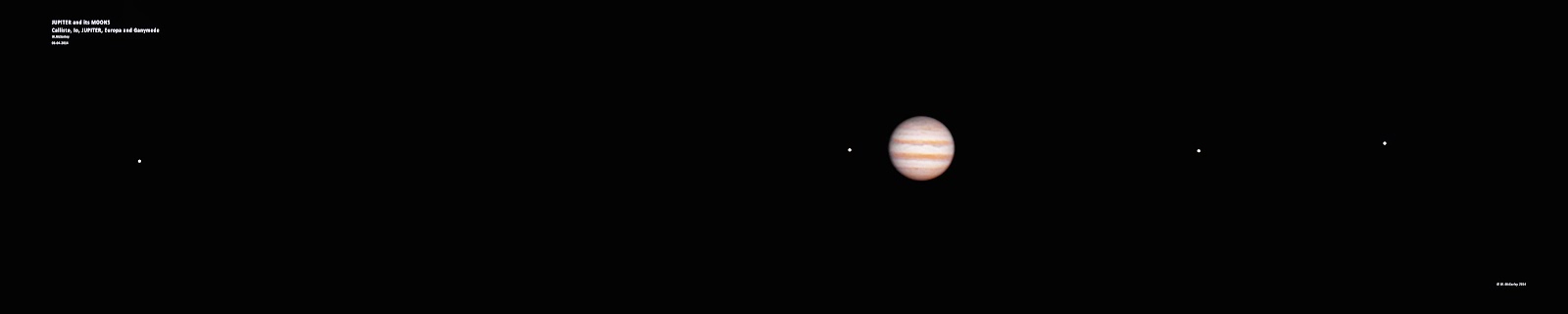

 As a one off challenge, we set a competition for one night
to photgraph the full moon.
As a one off challenge, we set a competition for one night
to photgraph the full moon. 


 As part of the open day we had Rocket Launching at the Grange.
 Some even get in to orbit !!
  Never look at the Sun through any Lens based device. Telescope, Camera, Binoculars, WHY !
 Comet
ISON, also known
as C/2012 S1 is a sungrazing comet discovered on 21 September 2012 by Vitali Nevski, and
Artyom Novichonok. Comet ISON’s
nucleus is around 5 kilometers (3.1 miles) in diameter. Comet ISON orbit will come to perihelion
(closest approach to the Sun) on 28 November 2013 at a distance of 1,860,000 km; or 1,150,000 miles from the center point of the Sun. Its trajectory appears to be
hyperbolic, which suggests that it is a dynamically new comet coming freshly
from the Oort Cloud. On its closest approach, Comet ISON will pass about 64,210,000 km; 39,900,000 miles from Earth on 26
December 2013.
Comet
ISON, also known
as C/2012 S1 is a sungrazing comet discovered on 21 September 2012 by Vitali Nevski, and
Artyom Novichonok. Comet ISON’s
nucleus is around 5 kilometers (3.1 miles) in diameter. Comet ISON orbit will come to perihelion
(closest approach to the Sun) on 28 November 2013 at a distance of 1,860,000 km; or 1,150,000 miles from the center point of the Sun. Its trajectory appears to be
hyperbolic, which suggests that it is a dynamically new comet coming freshly
from the Oort Cloud. On its closest approach, Comet ISON will pass about 64,210,000 km; 39,900,000 miles from Earth on 26
December 2013. This image of the Moon taken on Sunday 10th November 2013 is a mosaic composite image created using HD video images. Taken using a Celestron 8" SCT and a DMK 21AU04 CCD Mono Image camera.


 |
|

%2BJPEG.jpg)